Discover the good Apps to customize your Android and provide safe APK to download.
FamilySearch Tree is a free, cloud based genealogy software solution developed for individuals to discover, document and publish their family tree. It is a nonprofit tool, and has became the biggest collaborative family tree in the world with 1.2 billion ancestors contributed from around millions users across the world!
It provides an experience that's easy to use for newcomers and genealogy devotees alike. Users begin with entering basic information about themselves and their immediate family and simply follow the steps of an automated tree builder for each following step. One of the main elements is its shared tree model, so instead of creating private trees where users build their own individual tree roads — it actually helps people around to create common global one. It means that in matter you always have only one public profile for any genealogy person and eliminates duplicate entries issues a lot (each human should be represented as single entry).
FamilySearch Tree links users to billions of records and historical data, like birth certificates, census information, obituaries or immigration logs. It incorporates its auto-search feature, which looks into these records to feed hints that help users complete details and check information seamlessly. Profiles of living people remain private while those who have passed away make their profiles publicly editable for collaborative editing purposes.
Simplicity and collaboration is where the software really shines. Enhance the tree by allowing descendants to contribute pictures, stories and sources in order to make family profiles as holistic and accurate as possible. And also allows for users to have found relatives who were previously lost and share common ancestors, getting greater family connections.
FamilySearch Tree is cross-platform on desktop and mobile, enabling you to see your heritage wherever you go. It has a really nice interface, and with the fact that all features are free to access it makes for an app ideal for people wanting to track their ancestry & plot history of family tracing individual stories.
3.8/5 stars with praise for ease of use and community-driven research. Consistently ranks among top genealogy apps, with 10 millions of downloads. Highlight its value for discovering relatives and preserving stories but note frustrations with duplicate profiles and occasional bugs.
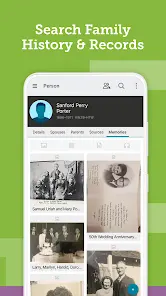
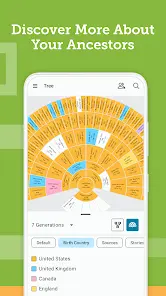

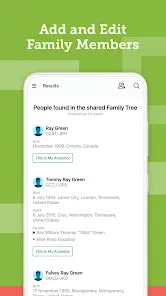
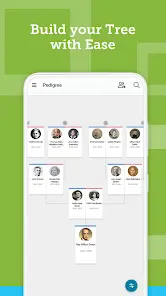
Combines records, profiles, and media into a single search bar. Written stories now save automatically to prevent data loss.
As a family history enthusiast, I find the FamilySearch Tree incredibly valuable. Its greatest strength is being a single, collaborative, and completely free global tree, which is a game-changer. I can connect my research to ancestors others have already documented, saving immense time. Features like record hints are brilliant, automatically suggesting historical documents for individuals in my tree. The ability to attach photos and stories brings ancestors to life.
However, the collaborative nature is a double-edged sword. It requires patience, as anyone can edit, leading to occasional incorrect changes that need to be reverted. The interface, while functional, can feel a bit dated and less intuitive than some commercial competitors. It sometimes has a learning curve for new users. The mobile app is handy for viewing but limited for serious editing.
Overall, despite its minor flaws, the FamilySearch Tree is an indispensable foundation for any genealogist. Its unparalleled access to a shared database and integration with the vast FamilySearch record collections make it the best free starting point for building and preserving your family's history.
Pros
1. Free access to billions of historical records (e.g., birth, marriage, census data).
2. Collaborative global family tree allows shared contributions and discoveries.
3. Automatic matching connects your entries to existing profiles in its database.
4. Multimedia support (photos, stories, audio recordings) preserves family memories.
5. AI-powered hints suggest potential ancestors or records to explore.
Cons
1. Public editing leads to inaccuracies due to unverified user contributions.
2. Duplicate profiles require manual merging, which can be time-consuming.
3. Limited privacy for deceased relatives' data (publicly accessible by default).
4. No GEDCOM upload restricts bulk import of existing family trees.
5. Occasional sync issues between app and web versions.
 Check All Versions
More Like This
More >>
-

YouVersion Bible App + Audio
Books & Reference
4.9
 Download
 -
Amazon Kindle
Books & Reference
4.7
Download -
Radish Fiction
Books & Reference
4.4
Download -
Audible: audiobooks, podcasts & audio stories
Books & Reference
4.5
Download -
Dreame
Books & Reference
4.3
Download -
Hallow: Prayer & Meditation
Books & Reference
4.9
Download






Additional App Information
-
Category:Books & Reference
-
Update:Apr 24, 2026
-
Size:184.3MB
-
Requirements:Android 10 and up
-
Developers:
Discover Apps






Top Downloads
-
WhatsApp MessengerCommunication4.3
-
TelegramCommunication4.3
-
Bigo Live - Live Streaming AppSocial4.4
-
Google Play StoreTools5.0
-
YouTubeVideo Players & Editors4.2
-
Walmart Shopping & GroceryShopping4.7
-
Discord: Talk, Chat & Hang OutCommunication4.5
-
WEBTOONComics4.8
-
MeetMe: Chat & Meet New PeopleSocial3.4
-
Tango – Live Streams & Live Video Chats: Go LiveSocial4.5